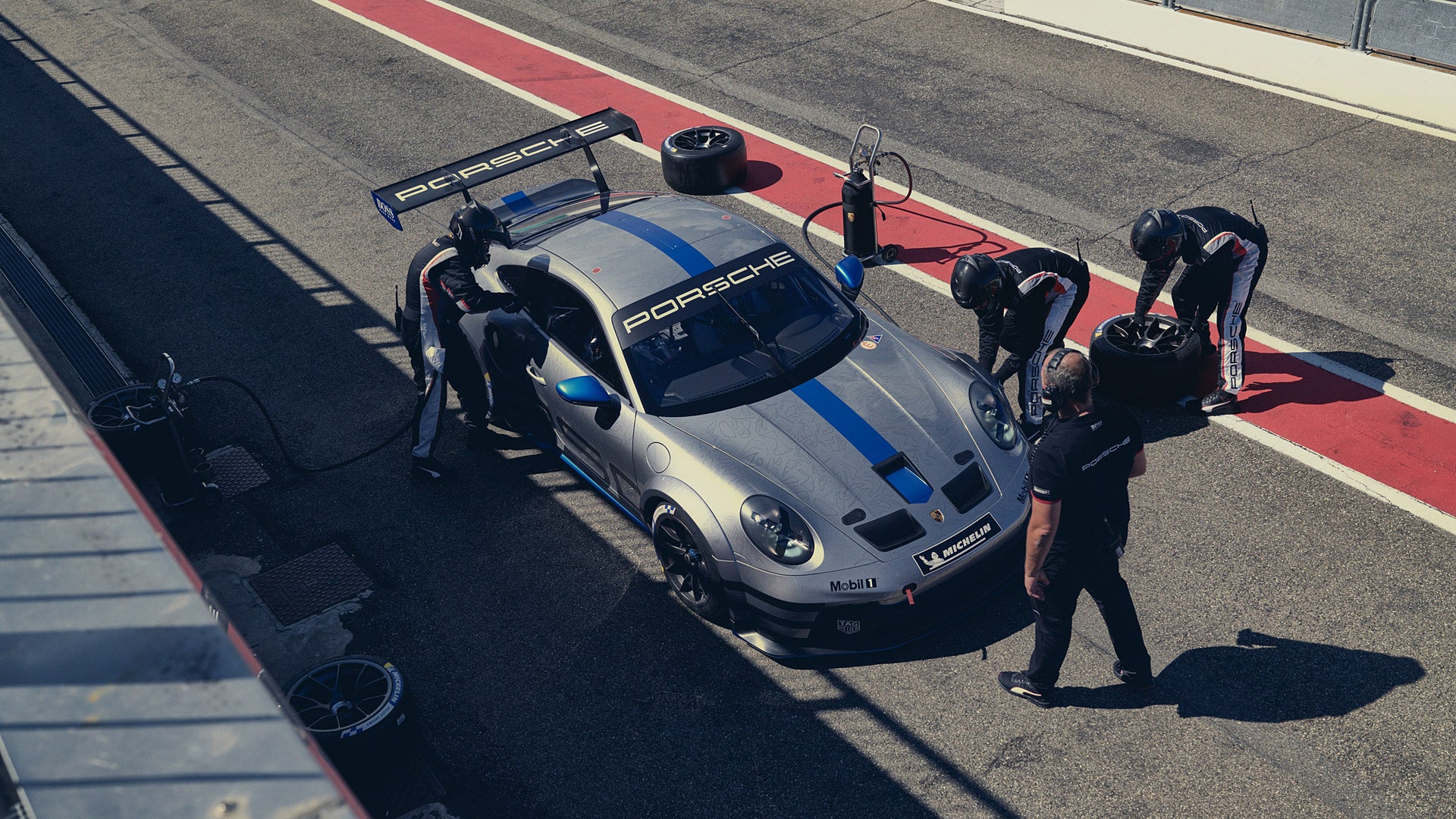
Within the high-stakes world of contemporary professional drifting, podium finishes is far more than solely a function of raw torque or driver courage. Conversely, it is now a intricate science which necessitates a scrupulous marriage of selecting a time-tested chassis, arming it with the most precise performance parts, and, most critically, grasping its real-time characteristics on the circuit through advanced vehicle dynamics analysis tools. This comprehensive manual will serve as your master plan from the initial idea of a project car through to the last telemetry-optimized refinements that turn a strong vehicle into a consistent podium finisher. We will delve deep into the methodical process of car suspension tuning, showing how a modern suspension tuning tool like precise measurement hardware removes guesswork and offers unparalleled clarity into your vehicle's true behavior.
The cornerstone of any great drift machine is, indisputably, the chassis itself. Several vehicles have earned legendary reputation within the global oversteer scene due to their built-in balance, robust design, and the enormous range of specialist support available. Picking the correct car is the primary and most significant decision a driver will make. To illustrate, the BMW E36 is widely regarded as perhaps the the finest overall cars for drifting of all time. Its near-perfect balanced front-to-rear weight, alongside a RWD configuration and bulletproof straight-six powerplants, establishes a chassis that is simultaneously forgiving for beginners and extremely competitive in the control of a professional competitor. The evolution of this concept, the BMW E46, builds upon these strengths with a more sophisticated structure, wider track for enhanced high-speed stability, and even more steering angle straight from the manufacturer. Another powerful contender in the top-level circuit is the Chevrolet Corvette C6.
This American sports car brings a particular combination of advantages to the drifting world, such as a light aluminium frame, a backwards-positioned drivetrain component that helps create an perfect front-to-rear mass ratio, and the tremendous torque of a powerful GM LS engine. This fusion transforms it into an complete monster on track, capable of starting and sustaining extended drifts with apparently minimal deployment of throttle. For those desiring exceptional bang-for-the-buck, the 350Z model Nissan stands out as a prime choice. It is delivered from the factory with a rigid chassis, a decent OEM LSD, and the smooth V6 motor that provides plenty of performance for learning and advancing in the activity. Its follow-up, the Nissan Z34, offers more improvements in chassis stiffness, steering geometry, and overall powerplant power, solidifying its position as a common choice among serious pilots. Further legendary platforms that warrant attention include the nimble Wankel-engined FC generation RX-7, the most popular Nissan S13, the V8-powered SN95 generation Mustang, the more recent BMW E90, and the small yet unbelievably fun and forgiving Mazda Miata. All of these chassis provides a different set of characteristics, challenges, and capabilities, but they all possess the basic ingredients essential to serve as a capable sliding vehicle.
However, selecting the optimal chassis is merely the first step. To unlock the true performance of every of these vehicles, significant modifications to the steering geometry and chassis control systems are completely essential. This is where the realm of specialist tuning components becomes critical view. The one most transformative modification for a purpose-built drift car is the fitting of a high-performance steering angle kit. These advanced kits, like those manufactured by industry leaders like SLR Speed, are designed to dramatically enhance the vehicle's possible steering angle. A factory production vehicle is severely constrained in how far its tires can rotate, a engineering trade-off for public road operation. In oversteer driving, but, maximum opposite lock is constantly necessary to manage and hold a slide. An modification kit exchanges the stock uprights, linkages, and often A-arms with parts that permit the steered wheels to attain degrees of turn over 70 or even 80 °, compared to a normal stock limit of around 40 to 50 degs.
This vastly greater steering angle gives the operator with exponentially enhanced control during a slide, allowing it to be much easier to start a oversteer moment, sustain it through a long bend, and transition fluidly from one direction to the opposite. The difference in drivability is nothing short of transformative. Combined with a properly chosen steering kit is the just as vital enhancement to the car's suspension. Generic or including premium street dampers are simply not engineered for the particular and harsh needs of drifting. A dedicated system of adjustable dampers is of utmost importance. These specific suspension components incorporate custom piston tuning and spring rates that are designed for the rapid mass transition that is inherent of sliding. When a pilot starts a slide, the car's inertia is thrown forcefully to the outer of the corner. Optimal competition suspension control this transfer in a controllable manner, enabling the chassis to find its balance promptly and providing the driver accurate feedback through the steering wheel and driver's seat. They furthermore enable precise tuning of ground clearance, rebound and compression stiffness, and corner weighting, which are all integral elements of fine-tuning the chassis's dynamics to a given venue or competition style. Together, a precision-engineered drift angle kit and a properly specified system of performance coilovers constitute the undeniable hardware base upon which all later refinement is built.
Once the core hardware is fitted, the following vital step in the build is the meticulous setting of the vehicle's suspension geometry. This is the realm of vehicle alignment optimization, a methodology that can appear overwhelmingly complex to the beginner but is, in fact, the key to turning a set of high-performance pieces into a harmonious and consistent vehicle. The most debated element of alignment for sliding is definitely negative camber. Wheel camber is the tilt of the wheel in relation to the vertical axis when looked at from the forward of the car. If the top of the wheel is leaning inward, this is called inward tilt. In oversteer driving, inward-leaning wheels on the front axle tires is generally employed and is seen as critical. The logic is fundamentally linked to vehicle dynamics.
When a chassis is cornering at extreme slip angles, the frame leans to the outer of the turn. This body roll causes the outer front tire to reduce its best footprint with the track surface. By adding an inward tilt, the tire is pre-tilted to counteract this tilt. As the car leans into the turn, the outside front tire gains a better contact patch on the track, maximizing its grip at the precise point when it is absolutely essential for control. Usually, front axle adjustments for a serious drift machine fall between approximately -3 degrees to as much as -5 degrees or even greater, depending on the specifics of the vehicle geometry, tire selection, and operator style. The rear tires also employ negative camber, but the values are typically more conservative and subtler than the front axle. Overly aggressive negative camber at the rear can cause the vehicle to extremely loose and difficult to manage on power use, as it diminishes the usable tire footprint of the driven wheels during straight-line power delivery. Therefore, rear adjustments are often in the ballpark of -1 degree to -3 degrees, striking a careful balance between offering adequate cornering bite to help in starting and sustaining the drift while still keeping effective hook-up for acceleration the turn. Camber is merely one component of the more complex alignment puzzle, which furthermore encompasses toe setting, caster angle, and suspension-induced steering correction.
Toe angle describes the orientation of the tires as seen from the top. Toe-in means the leading edges of the wheels are nearer together than the trailing edges, while outward toe means the reverse. For oversteer, a modest amount of front toe-out is commonly used to quicken the initial directional feel, making the car feel more agile and eager to begin a oversteer moment. Rear axle toe angle drift angle kits is usually set to neutral or a very slight amount of toe-in to promote predictability under acceleration. Caster is the frontwards or rearward inclination of the suspension pivot when looked at from the side-on of the car. Positive caster enhances self-centering and high-speed stability, and it additionally adds to negative camber effect during steering, which is extremely beneficial. Tuning these settings is a complex interplay where a modification to one value can and often will affect the remaining parameters. The conventional method for dialing in a vehicle's suspension geometry for competition has historically been a time-consuming process of guesswork and adjustment. A driver or crew would make a modification based on experience, test the chassis on track, rely on the operator's personal perception and impressions, and then make a further change. This process would repeat time after time until the vehicle felt "acceptable" or the scheduled track time ended. This methodology is not just incredibly wasteful in terms of hours and costs, but it is additionally fundamentally inaccurate.
Pilot perception is a famously inconsistent measurement tool, influenced by numerous elements such as fatigue, evolving track surfaces, ambient heat, and merely the focus of the driver on that particular day. What feels "tail-happy" on one lap might feel "pushing" on the subsequent pass, causing contradictory data and counterproductive tweaks. This traditional limitation in chassis setup is precisely where state-of-the-art technology has stepped in to revolutionize the process.
The rise and adoption of sophisticated suspension tuning applications has introduced a radically different age for building and optimizing competitive drift cars. These platforms, represented by innovative systems like data acquisition tools, operate by actively capturing the live mechanical performance of the chassis as it is being driven on the circuit. In contrast to relying on subjective impression, these tools gather objective information on key parameters such as suspension travel, corner velocities, acceleration forces, wheel angle, and driver input input. This collected information flow is then processed by advanced software that can plot and decode the data in a clear format. For the first time ever, engineers and crews can observe exactly what the car is performing at each point of a drift. This ability revolutionizes the entire chassis setup process. Think about the aforementioned goal of setting the front axle camber for a specific chassis. Rather than introducing a modification from -3 degrees to -3.5 degrees and then driving several runs to try and "sense" a improvement, a telemetry system can give immediate and clear feedback. The application can indicate graphically how the suspension's grip is acting during the most important moments of a slide: the initial flick, holding the angle, and changing direction. It can reveal if the present angle is allowing the steering tire to maintain optimal grip or if the tire is overloaded on its outside shoulder.
The software can after analysis suggest data-driven suggestions for modification. Perhaps the information reveals that the outside front tire is still overworking its outer shoulder at -3.5 degrees of negative camber, indicating that an increase to inward lean, say -4 degrees, might be advantageous. On the other hand, the data might show that the tread is not coming up to temperature or that the inside edge is degrading excessively, which could suggest that there is overly aggressive inward lean and a slight lessening back to -3.2 degrees would be more efficient. This degree of granularity and actionable intelligence was simply impossible in the era of pure seat-of-the-pants adjustment.
The impact of using a comprehensive suspension tuning tool goes much further than only dialing in alignment. It becomes an invaluable damper adjustment manual that is specific to your particular car. When adjusting the rebound and compression clickers on your suspension, rather than depending on general advice or copying another driver's setup, you can use the software to see how the chassis is reacting in reaction to your adjustments. The tool can show the damper movement data over a section of track, revealing if the shocks are handling the weight transfer optimally or if they are permitting the chassis to oscillate excessively after a transition. It can assist in identifying issues like hitting the bump stops or topping out, permitting you to apply data-backed choices to preload settings, rebound/compression settings, or ground clearance. This methodology applies just as well to the complex task of car alignment tuning. Beyond camber angle, the system can give insight into how modifications to toe settings and caster are impacting the vehicle's handling during different parts of a drift. For example, it can allow you to determine the optimal amount of front negative toe for your specific steering rack setup and piloting approach by showing the response time of turn-in reaction and the stability of the chassis at maximum steering angle. This turns the software an extremely useful drift suspension tuning guide that is actively informed by the actual behavior of your specific vehicle on the circuit. It shifts the entire endeavor from a dark art into a repeatable optimization procedure.
Furthermore, the application of a system like data acquisition is in no way confined to expert teams with extensive budgets. For the grassroots enthusiast, it serves as an amazing educational tool. It effectively provides the driver with the knowledge of a expert race engineer without requiring the typical expense. It accelerates the tuning process by giving definitive solutions to challenges that would otherwise take countless track days of trial and error to understand. A driver can understand how their specific car behaves to various adjustments, developing a more intuitive knowledge of vehicle dynamics in the process. It additionally democratizes advanced suspension engineering principles, permitting all drivers with the drive to refine their drift suspension tuning guide car to achieve it in a structured and productive way. This is especially significant in a activity like drifting, where tuning knowledge has historically been a tightly held asset among elite teams. In the modern era, that power can be in the toolkit of every motivated builder.
In conclusion, the path to engineering and tuning the ultimate championship-contending drift machine is a comprehensive project that perfectly blends time-honored engineering principles with cutting-edge data tools. It starts with the wise selection of a legendary car, then built upon the application of essential competition hardware like maximum-angle angle modification systems and correctly valved performance coilovers. The journey then advances into the intricate stage of alignment optimization, where parameters like camber angle, toe setting, and caster angle are meticulously set to suit the vehicle's modified hardware and the operator's specific technique. The final step, and what really separates the contemporary approach from the traditional methods, is the use of a advanced suspension tuning application. This system eradicates the guesswork and trial and error of solely seat-of-the-pants tuning by delivering objective, actual information on how the car is truly behaving. It acts as an indispensable suspension tuning tool, a comprehensive alignment optimization handbook, and a comprehensive vehicle dynamics tool. As a complete package, this complete philosophy ensures that every element of the competition vehicle—from the pick of the chassis to the final adjustment on the vehicle dynamics tool suspension—is refined for peak competitiveness on the circuit. It represents the complete maturation of the sport of oversteer driving, connecting physical car control with data-informed vehicle setup to create the perfect dominant machines attainable.